Latest Articles & Research

The Interdependence of Righs and Duties

By Rights, Duties and Law

This study seeks a better perspective on the legitimacy of conditional civil rights in democratic nations.

To this end, we examined legal practices that pertain to pledging allegiance and prisoners’ voting rights in the 15 most liberal countries according to the Freedom House index. We also reviewed the conscription policy in  7 democratic nations that still uphold (needed) conscription and have an equal to or higher rate than Israel in the Freedom index.

Allegiance: Like Israel, 9 out of the 15 states require naturalized citizens to pledge allegiance to the state–Canada, Netherlands, Australia, New-Zealand, Uruguay, Denmark, Ireland, Austria, Belgium.

One state (Japan) upholds a similar procedure which involves a declaration to choose Japanese nationality by the naturalized citizen. Read More

Law Enforcement In Judea and Samaria

By Rights, Duties and Law

This study examined methods of law enforcement in Judea and Samaria in three case studies: enforcement of building laws, enforcement of water laws, and enforcement of traffic laws. The study’s objective is to present the reality on the ground, primarily according to findings in relevant State Comptroller reports, and to explain the problems involved in these issues and their broader context. The main findings are presented below:

  • In the field of building it seems that there is significant under-enforcement, leading to many illegally constructed buildings not being demolished. This state of affairs stems from coordination and policy failures at different stages of the demolition process. Furthermore, no criminal enforcement exists against those violating the building laws.
  • In the water field, the lack of coordination between all the relevant bodies results in almost unhindered water theft in Judea and Samaria. The authorities fail to efficiently seal the illegal boreholes and sever the pirate connections. Here too, the authorities fail to conduct criminal proceedings against violators of the law.
  • In the field of traffic, there are two legal systems in Judea and Samaria. The Palestinians are tried before a military court while Israelis are tried by an Israeli court. A dispute regarding jurisdiction between the military prosecution and the Judea and Samaria Police has led to a situation whereby Palestinian drivers suspected of traffic offences are almost never brought to trial in the military courts.

Read More

Democracy in Dilemma: Means for Fighting Terror

By Israel Among Nations No Comments
Amit Eisenman, one of the Institute’s researchers, has recently focused on the question of the legitimacy of using singular measures of punishment and deterrence to combat a singular crime – terror. In keeping with our best tradition, we chose to examine the issue by means of a comparative study with the aim of refuting the claim that targeted preventative killings, demolitions of houses and revocation of citizenship are unreasonable means in a democratic regime.
The study examines the use of these three practices in the fight against terror in the member countries of the G7 – Canada, France, Germany, Italy, Great Britain and the US. This study aims to enhance the perspective of decision-makers in Israel and to demonstrate how different countries contend with the similar challenges of fighting terror they share. The main findings are presented below:
Regarding targeted preventative killings, 4 of the 6 countries examined maintain armed UAVs (Unmanned Aerial Vehicle) intended for use in this faculty. In practice, such killings have been employed by 3 of these countries in recent years (those with larger armed forces and broader scope of operations).
Although this form of house demolition is a procedure uniquely instigated by the State of Israel, a person convicted of terrorism in France also forfeits his assets to the state.
Revocation of citizenship is the most commonly employed means of those studied: all the above countries employed this practice and apart from Canada, which has foregone its use, revocation of citizenship is still implemented by the other countries. In Italy, a terrorist’s citizenship may be revoked even if he remains stateless as a result.

to the full research…

The Truth according to Breaking the Silence: An Analysis of Testimonies

By Fighting Anti-Israel Activity No Comments

In recent years, the Breaking the Silence organization has released a series of publications that expose a database of IDF soldier testimonies from their service in Judea and Samara, as well as the various Gaza operations. Based on these testimonies, Breaking the Silence has concluded that the IDF is in a moral and ethical decline. This decline, they explain, is the direct result of the continuous existence of the “occupation” policy.

In light of the organization’s statements about a systematic moral deterioration of the military system, we have conducted research in which we have carefully examined 100 of the total testimonies presented by BTS – according to select criteria: incident time and location, military layout, described damage type, context, etc., in order to deeply examine BTS’ testimonies and the validity of their conclusions.

The research suggests that there is no correlation between BTS’ claims and the conclusions suggested by their presented testimonies. Our research indicates several fundamental problems that impair the validity of BTS’ conclusions regarding the IDF’s warfare practices and its routine conduct with civilians

to the full research…

Total Fertility Trends in Israel

By Demographics No Comments

Total Fertility Trends in Israel:Total Fertility Trends in Israel: How did the Demographic Time Bomb become a Demographic Miracle? Summary Researchers and policy makers periodically air the claim that the Arab population between the Jordan River and the Mediterranean is growing at a rate double to that of the Jewish population, a fact that will, in the near future, lead to the negation of the Jewish majority. This concern, known as the “demographic time bomb”, stands at the heart of a dispute among different demographists and arouses an intense argument in Israeli academic and public discourse. The objective of this paper is to construct an accurate picture of the demographic reality in Israel and to assess the true dimensions of the demographic threat.As is well known, two mechanisms determine the size of a population: life expectancy at different ages and the rate of fertility.  In this paper, we examined the trend of the total fertility rate among population groups living in Israel according to nationality, religion and different settlement regions over a range of periods. Furthermore, we compared this trend with the development of the total worldwide fertility rate and of the populations of different countries in the Middle East. An analysis of the data gathered revealed both trends of growth among the Jewish and Arab populations during the last 60 years and expectations for the future. A summary of the main findings is presented below:

• At the beginning of the 21st century, a turnaround was registered in the fertility level of the Jewish population: Total Jewish fertility had previously declined for 45 years, from the beginning of the 1960s until the end of the century. Until 1995, the total fertility rate among Jews in Israel was the lowest of all Middle Eastern countries and significantly lower than the total fertility rate among the Arab population living in Israel. However, the total Jewish fertility rate began to rise rapidly from 2001, reaching 3.16 children per woman in 2016. This figure was higher than the total fertility rate in 10 of the 15 Middle Eastern countries surveyed and higher than the total fertility rate of the Arab population in Israel, Judea and Samaria, and Gaza. In only 4 countries in the Middle East – Iraq (4.06), Yemen (3.77), Egypt (3.30), Jordan (3.18) and in the Gaza Strip (3.91 or 4.30 depending on the estimation of the US Census Bureau) – was the total Arab fertility rate higher than that of the Jews in Israel. Read More

Multiplicity of Kashrut Certification

By Kashrut, Religion and State No Comments

This study examines the phenomenon of multiple kashrut certifications in the local food products market. The study aims to assess the extent of this phenomenon and to draw conclusions from the findings as to the relevance of Chief Rabbinate kashrut certification for the food manufacturers. The study’s findings clearly indicate the Israeli food manufacturers’ ready willingness to acquire private kashrut certifications in addition to that of the Chief Rabbinate mandated by law, this despite the high extra costs involved. The study also found that in many cases, the Chief Rabbinate’s function in this field was deemed ineffective or one that lacked any added value from a kashrut perspective.

To the full research…

January 2019 Newsletter: Law Enforcement In The Arab Sector

By Newsletters No Comments

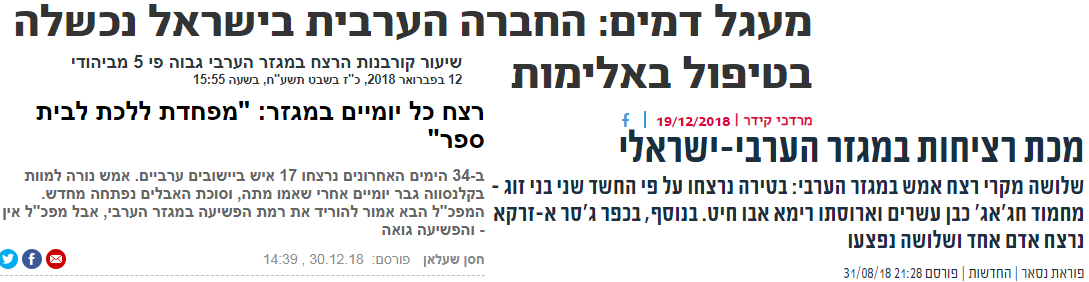
15 years after the Wadi Ara riots we decided to check what has changed in the relations between the Arab-Israel community and the police. Between over-policing and lack of law enforcement, and between confidence-building measures and the community’s representation among police officers, the Orr commission recomendations are implemented only slowly.

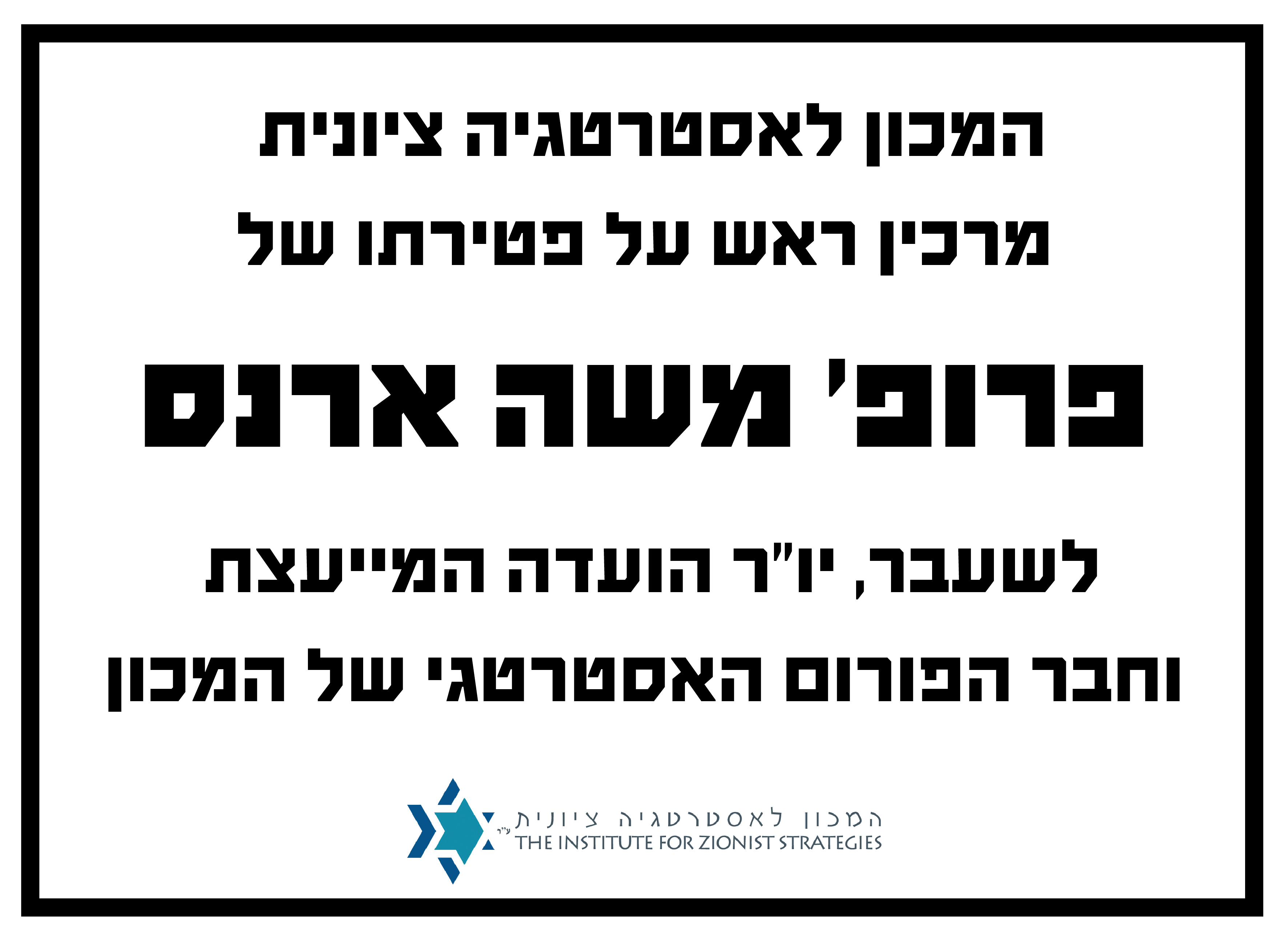
This month we lost Pr. Moshe Arens zal, head of the IZS’ advising committee.

Law Enforcement In The Arab Sector

Three years following the October 2000 events, the Or Commission published its recommendations for the improvement of the relations between the Israeli police and the Arab society.

The commission’s report made recommendartios in three major areas: the treatment of Israeli Arabs as nonhostile, the promotion of dialogue and cooperation between the police and the Arab society and equal enforcement of the law in the Arab sector.


This paper examined the degree to which these recommendations have been implementated in the 15 years since the issuance of the Orr Commission’s report.
With regards to the treatment of Arabs by the police, we found that the Israeli police uses excessive force towards the Arab society compared to the Jewish society. In addition, the Arab sector is, to some extent, subject to over-policing. In recent years, the percentage of arrests that didn’t result in pressing charges among Israeli Arabs was significantly higher than its equivalent in the Jewish sector. These issues have probably accounted for the decline in the level of trust in the police among Israeli Arabs since 2003.
____________...
With regards to strengthening the dialogue between the police and the Arab sector, we found that government decisions aimed at expanding the Civil Guard apparatus in the Arab sector have been partially implemented. Moreover, Arab volunteers in the police make up a small part in proportion to their share in the population.
With regards to equal law enforcement in the Arab sector, we found that major Arab cities are still lacking in police stations. This is in part the result of objections by some of the Arab municipalities to allocate lands for the purpose of establishing new police stations. In addition, Arabs’ participation rate in the police force is much lower than their share in the population. Efforts to tackle these problems have been made as part of the implementation of government decision No. 922.

For the complete study


East Jerusalem
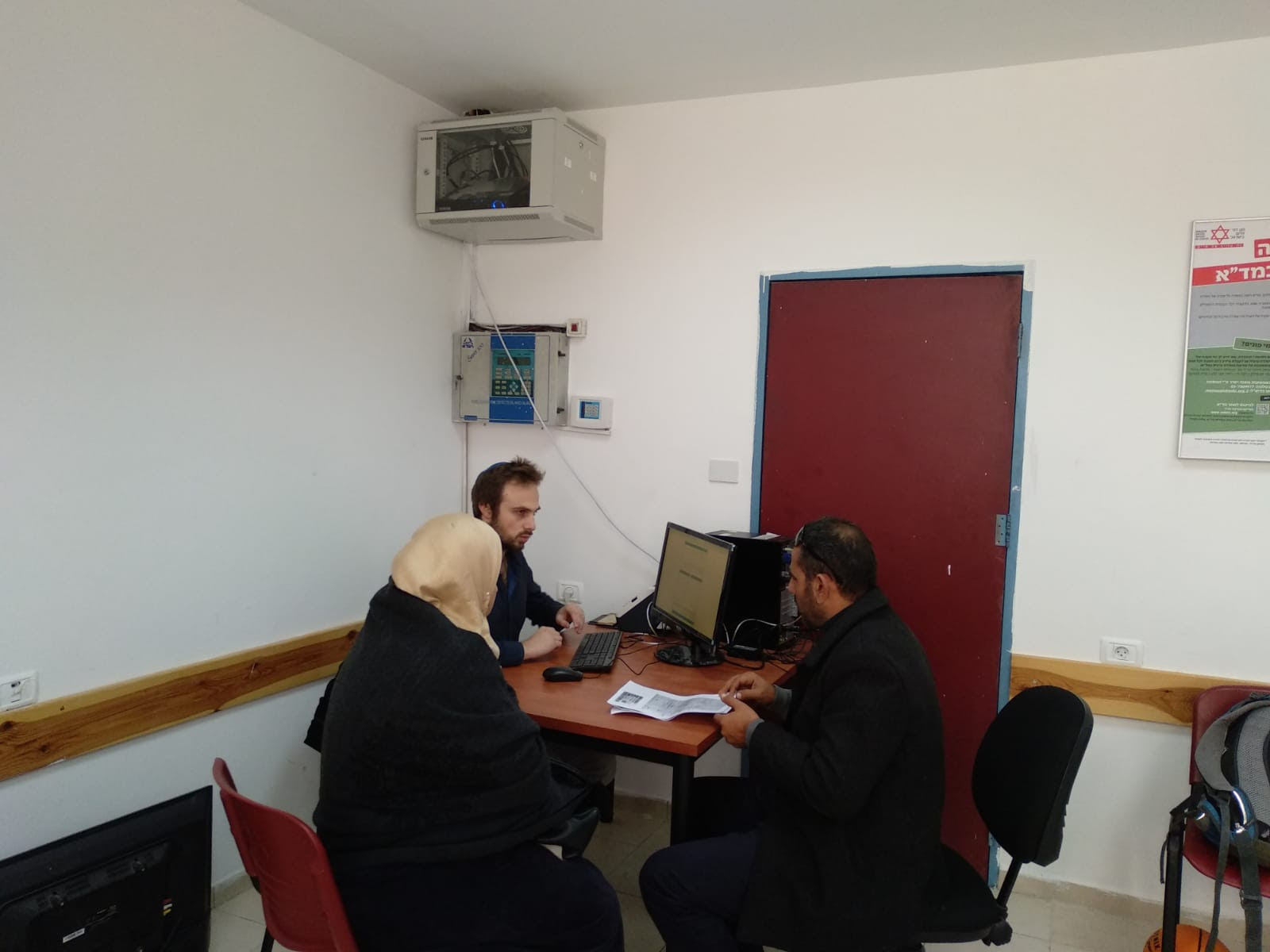
___________11We are proud to help strengthen municipal services! At the occasion of the new civil year, our information center in Zur Baher has started an important cooperation with the Jerusalem municipality. From now on residents will be able to register their children in the school system or appeal local tax or tickets from our offices, without having to go to the city hall. Jerusalem’s new mayor Moshe Leon praised the initiative on his Arabic Facebook page.

We have opened a Facebook page for our Zur Baher project – share and help us inform Arabic speakers!

Religion and State
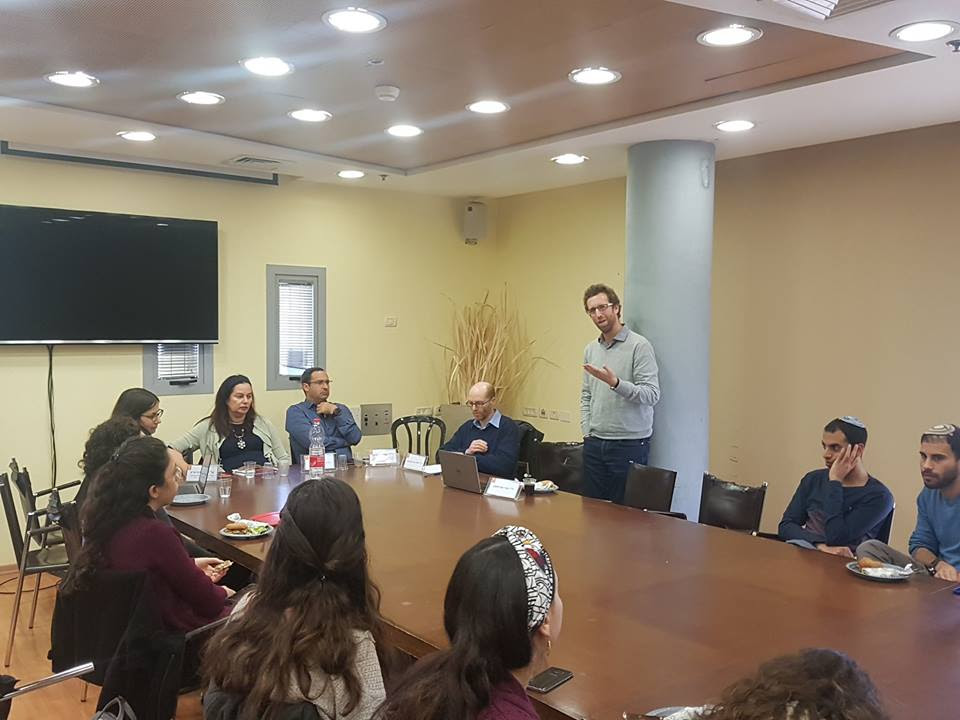
___________11Institute CEO Miri Shalem took part in an important panel on social lobbying for religion and State related issues. The panel took place at the occasion of the 70th anniversary of the Knesset, at Center for Jewish and Democratic Law – Bar Ilan University. Other central participants were head of the Rackman Center for the Advancement of the Status of Woman Adv. Keren Horowitz, and head of the People, Religion and State Center at the Israel Deomocracy Institute Prof. Shouky Fridman.

Institute News
___________11
Early January passed away professor Moshe Arens, who played a central role in the founding years of the IZS. Arens, a two-times Defence minister, was also the head of our advising committee and participated to the strategic forum’s discussions.

יהי זכרו ברוך.


The Institute in the Media

Tablet magazine published an extensive coverage of Blue&White’s activities at the Qalandia crossing.
The sex-corruption scandal in the justice system was the occasion for The Marker to publish the main conclusions of our comparative research on judges nomination throughout the world.


Publications

The following English-language articles were published by members of the Institute and contain references to a wide range of issues on the public agenda:

IZS Chairman Dr. Yoaz Hendel warns liberals: the Palestinian state they call for won’t be Human Rughts friendly whatsoever (Yediot Aharonot).
Founding Chairman of the Institute, Israel Harel analyzes the current elections campaign and the dire straits of some of Israel’s historical parties (Haaretz)
Nave Dromi, the head of Blue&White Human Rights thinks part of the progressive US Jewry is responsible for most of the crisis with Israel.

Adalah versus the Bedouins Case Study: A Comparative Analysis of the Immunization Policy in Israel

By Israel Among Nations

Is a law which stipulates that immunizations are a prerequisite for receiving child benefit payments acceptable in a democratic society? This question has been the subject of an argument about Israeli immunization policy in recent years.

The main opposition to the law comes from Adalah – the Arab-Israeli human rights organization – which appealed to the High Court of Justice against the law. According to Adalah, the law discriminates against the Bedouin and other Arab communities who do not vaccinate themselves due to lack of access to medical services. Moreover, there are those who claim that the law limits parents’ autonomy to decide what is best for their children and to object to vaccinations on religious or ideological grounds.

The study investigated these claims in depth and examined whether the Israeli policy is consistent with the principles of a democratic society. The study presents, among others, a historical survey of the development of immunizations and related laws, the different motives for objecting to immunizations, and a comparison between the Israeli immunization policy and that of 23 countries included in the OECD. Among the countries surveyed are the US, Australia, Germany, Turkey, Sweden, and many others. Read More

The Expulsion Law

By Rights, Duties and Law No Comments
On July 20 2016, the Knesset passed the final approval of “The Expulsion Law” according to which, a serving Member of the Knesset may be removed from his position if three quarters of the Knesset Committee members determine that he has incited to racism or expressed support for an armed struggle against the State of Israel.[1] This law has aroused protests among many members of the Opposition and certain organizations such as Adalah (The Legal Center for Arab Minority Rights in Israel) that present themselves as being concerned for the rights of Israel’s minorities. According to them, the law constitutes a mortal blow to the values of democracy. They further claim that its sole purpose is to expel Arab Knesset members.

In order to attempt and resolve the issue, we have chosen to study the state of affairs in countries possessing characteristics and regimes similar to those of Israel i.e., democratic nation states. Accordingly, the study presented below examined limitations imposed on political parties and on members of parliament in twelve democratic states, members of the OECD. The study surveyed the existence and actual implementation of legal preventative measures that restrict the foundation or registration of political parties seeking to participate in elections, and also retroactive steps including disassembly or disqualification of a party after its foundation, and suspension or expulsion of a serving member of parliament.

This publication constitutes a complementary study to two relevant studies on the subject published by the Knesset Research and Information Center (hereinafter: RIC) that were conducted in 2006 and 2016 and that, among others, is based on their findings. Read More

Hafkaat Kiddushin

By Marriage, Religion and State No Comments

This position paper presents the proposed law that seeks a legally mandated solution for the problem of aginut (the situation whereby a spouse is ‘chained’ to a marriage) resulting from the husband’s refusal to grant his wife a get (a halakhic divorce), or from her refusal to accept a get.  A get ends the marriage. The proposed law is based on a mechanism that was suggested in the Babylonian Talmud to enable the Beit Din (Rabbinic Court), in severe circumstances, to annul the validity of the betrothal that the couple had originally mutually entered. This mechanism is termed hafka’at kiddushin (retroactive annulment of the betrothal).

As explained in the paper, the authority for such retroactive annulment is given not only to the Beit Din but also to the ‘kahal’ – the community. In other words, the community in which the couple lived, also has the authority to decide on implementation of the retroactive annulment of a betrothal in those cases in which the members of the community see fit. In contemporary circumstances, the ability to make such decisions “in the name of the community” can be understood to reside with our elected representatives i.e., the members of the Knesset. The central recommendation of Professor Berachyahu Lifshitz,[1] the author of this paper, is that the harsh reality of aginut created by recalcitrant husbands, should lead the Knesset to legislate the use of hafka’at kiddushin as a means of solving the problem, thereby saving women from this tragic plight.

[1] Berachyahu Lifshitz is a professor of law, senior research fellow at the Institute for Zionist Strategies, the former dean of the Faculty of Law at the Hebrew University, an expert in Jewish Law and laureate of the EMET Prize awarded under the auspices of the Prime Minister of Israel.

To the full research…

Font Resize
Contrast